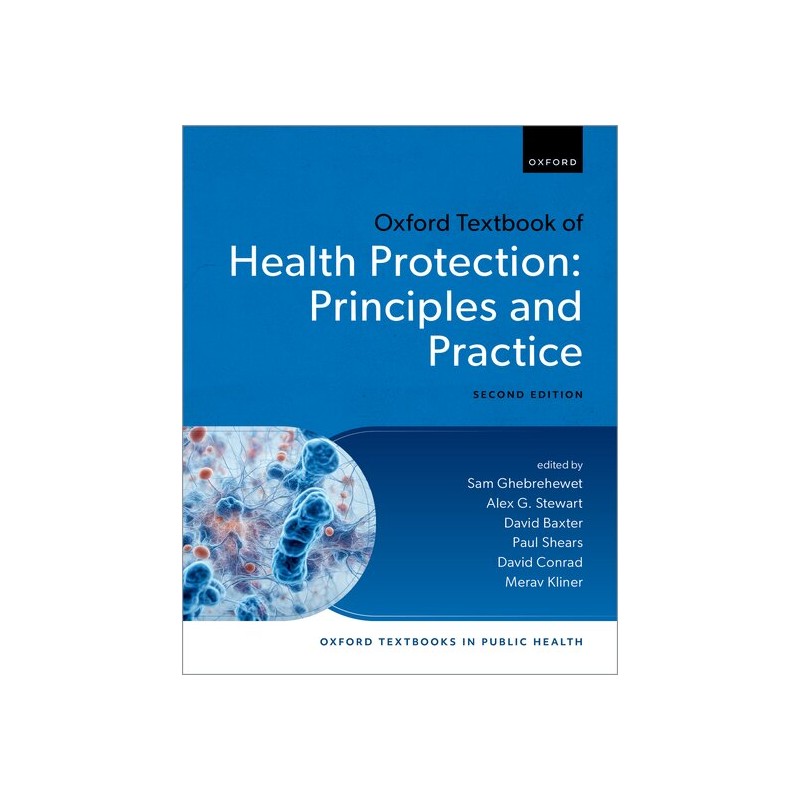
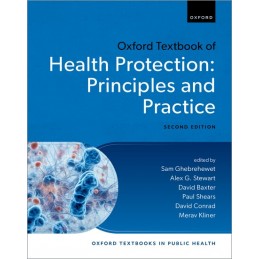
The Oxford Textbook of Health Protection:: Principles and Practice is a comprehensive guide to this important field, addressing all key domains, from communicable disease control and emergency preparedness to environmental public health. Written by leading practitioners and specialists in the field, the book is rooted in a practice-led and evidence-based, all-hazards approach, which facilitates easy access to real-world practice and application of health protection andhealth security principles. This second edition has been fully revised and expanded to meet the needs of an ever-evolving audience and now sits within the authoritative Oxford Textbooks in Public Health series. This second edition includes 12 new chapters, covering new and emerging topics such as COVID-19 pandemics, genomics epidemiology, non-pharmaceutical interventions, and concepts and framework for future pandemic preparedness. The chapters are arranged into six distinct sections. Each chapter provides trustworthy evidence and a wealth of practical advice, including case studies in community and hospital settings, and practical scenarios. The real-life scenarios provide topic-specific information,explore a wide range of responses using the what if questions that are supported by tools of the trade to encourage reflection, and reinforce consolidation of knowledge. The book also includes a unique tool of self-contained checklists (SIMCARDS) covering more than 180 common and important topics that can arise in health protection practice (including those featured in the scenario chapters), with concise and succinct stand-alone quick reference guides on how to handle them within and out-of-hours.This resource is essential reading for professionals working at all levels in public health and health protection, including those with a non-specialist background in this continually evolving and complex field of public health. All the editors and authors have been active in the field of health security and involved through experiential learning in the management of incidents, outbreaks, and other health protection situations for decades. All were at the forefront of the response to the COVID-19 pandemic. They are uniquely able to reflect pragmatically and personally on health security and health protection practice in a variety of situations. This book is, therefore, a practical product of the wealth of theircombined experience and will support current professionals in their efforts to ensure the protection and health security of individuals and populations in the UK and internationally.From the Foreword by Professor Dame Jenny Harries DBE DL, First Chief Executive, UK Health Security Agency (UKHSA)
Section 1 - The basics; Health Security and Health Protection; Health Protection professionals and partners; Key principles and practice of health protection; The fundamentals of public health microbiology; The fundamentals of environmental public health practice; International Health Regulations; Section 2 - Infectious disease control case studies and scenarios; Shiga toxin producing Escherichia coli (STEC); Hepatitis B; Hospital multi-resistant infections; Influenza; Legionnaires disease; Measles; Meningitis and meningococcal disease; Tuberculosis; Hepatitis A; Cryptosporidiosis; SARS-Cov-2/COVID-19; Section 3 - Emergency preparedness, resilience and response (EPRR), and business continuity case studies and scenarios; Business Continuity: illustrated by hospital ward closures; Fire and health protection; Radiation and health protection; Section 4 - Environmental Public Health practice case studies and scenarios; Flooding and health protection: immediate and long-term implications; Ambient air pollution and health; Cancer and chronic disease cluster(s) investigation; Section 5 - Health protection tools; Hospital & Community Infection prevention and control; Immunisation; Incidents & Outbreak Management; Genomic epidemiology for outbreak management; Health Protection Surveillance; Essential Statistics and Epidemiology; Conducting Epidemiological Studies in health protection; Using Evidence to guide practice in health protection; Quality Assurance & Audit; Evaluation in Health Protection; Screening in Health Protection; Non-pharmacutical Interventions, isolation, and quarantine; Occupational Health and Health Protection; Section 6 - New and emerging health protection issues; Emerging Infectious Diseases; Preparing for pandemics in the context of COVID-19; Emerging Environmental Public Health issues; Disasters and risk reduction strategies: applying international learning at local level; Sustainability and health protection;
Comments (0)
Your review appreciation cannot be sent
Report comment
Are you sure that you want to report this comment?
Report sent
Your report has been submitted and will be considered by a moderator.



 Delivery policy
 Security policy
 Return policy