- Reduced price
- New

Order to parcel locker

easy pay

 Delivery policy
Choose Paczkomat Inpost, Orlen Paczka, DHL, DPD or Poczta Polska. Click for more details
 Security policy
Pay with a quick bank transfer, payment card or cash on delivery. Click for more details
 Return policy
If you are a consumer, you can return the goods within 14 days. Click for more details
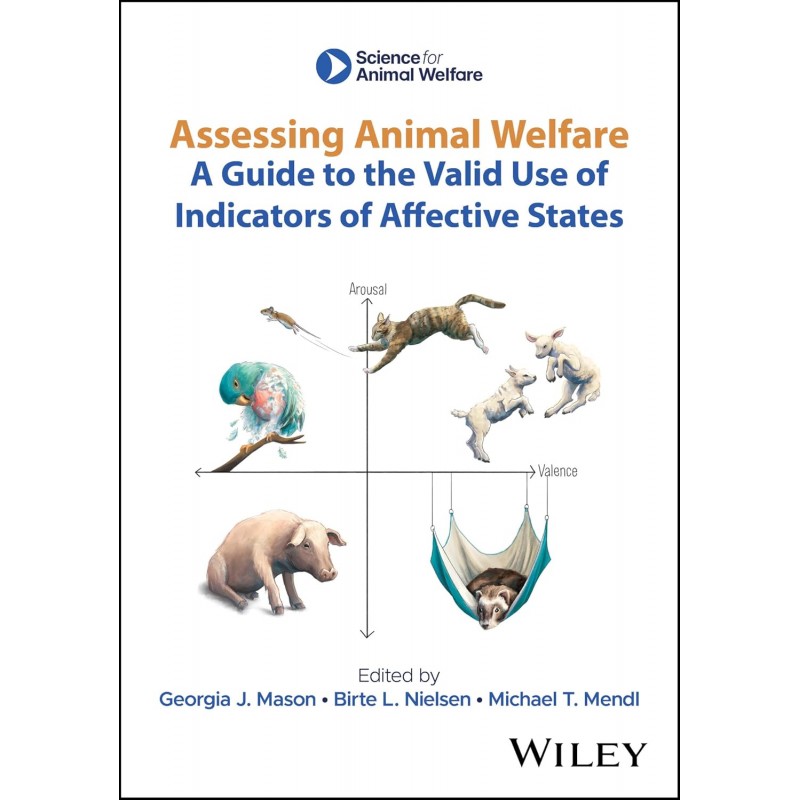
A clear, practical guide on how to use validated indicators of affective states
Assessing Animal Welfare is a guide on how to use accurate indicators to assess the welfare of animals. The basis for this book is construct validity:: how we can validate different indicators that are commonly used to assess animal welfare and apply this knowledge when using these indicators.
Starting with two chapters on the challenges of assessing emotions and moods in animals, and the importance and basis of construct validation, the following chapters evaluate the validity of 11 indicators that range from being suitable for assessing short-term emotions to assessing cumulative negative affect over a lifetime. Each chapter further highlights the limitations of each indicator and provides clear, useful guidance on its interpretation to avoid associated pitfalls. The book also shows how different indicators can complement each other, with real-life examples showing how to put theory into practice. The final chapter concludes by discussing some of the remaining challenges.
Written by leading experts in their respective fields, Assessing Animal Welfare presents::
Assessing Animal Welfare serves as a clear and practical guide for animal welfare researchers, veterinarians, and students of animal welfare science, helping them evaluate and use the most accurate affective state indicators for a given situation.
Data sheet
1 Animal welfare and affective states
2 Measuring the unmeasurable: the construct validation of affective state indicators
3 Preference and avoidance tests
4 Vocal signals
5 Acute Glucocorticoid Responses
6 Body temperature and heart rate
7 Judgement biases
8 Play behaviour
9 Reactivity to rewards
10 Dehydroepiandrosterone (DHEA) and glucocorticoids-to-DHEA(S) ratio
11 Abnormal Repetitive Behaviours
12 Telomere length
13 Hippocampal structural plasticity
14 The importance of construct validation, and (more) tools for valid use of indicators – what have we learned and what is still missing?