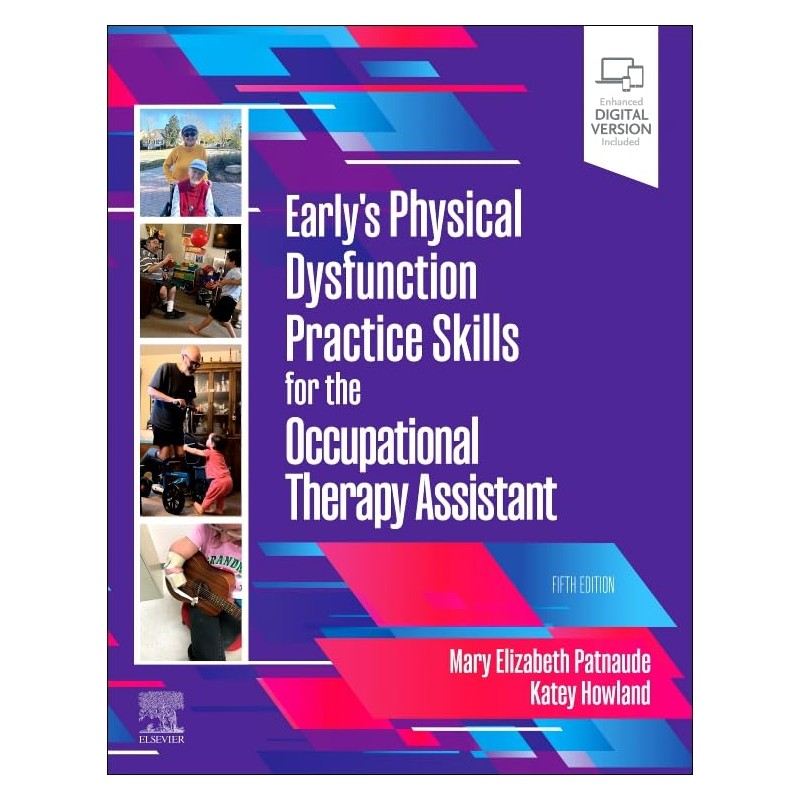
Master the role and skills of the OTA in caring for adults with physical disabilities! Early’s Physical Dysfunction Practice Skills for the Occupational Therapy Assistant, 5th Edition, is the only textbook on the rehabilitation process written specifically for OTA students and practitioners.It takes a client-centered approach, following the latest Occupational Therapy Practice Framework in addressing topics such as assessment, interventions, and clinical applications. This edition adds new content on collaboration between Occupational Therapists and OTAs, and an digital version version is included free with print purchase. From a team of expert contributors led by Mary Elizabeth Patnaude and Katey Howland, this book shows how you can succeed in the OTA role and help clients learn to perform functional tasks.
PART I: Foundations 1. Occupational Therapy Treatment in Rehabilitation, Disability, and Participation 2. Meeting Occupational Needs Through the Practice of Rehabilitation, Disability, and Participation
PART II: Process 3. Occupational Therapy Process: Evaluation and Intervention in Physical Dysfunction 4. Health Promotion 5. Effective Documentation of Occupational Therapy Services 6. Infection Control and Safety Issues in the Clinic
PART III: Collaboration and Information Gathering 7. Assessment of Activities of Daily Living and Instrumental Activities of Daily Living 8. Assessment of Joint Range of Motion 9. Assessment of Muscle Strength 10. Evaluation and Observation of Deficits in Sensation, Perception, and Cognition 11. Assessment of Motor Control and Functional Movement
PART IV: Performance in Areas of Occupation 12. Occupations, Activities, and Interventions to Support Occupations 13. Participation in Activities of Daily Living 14. Mealtime Occupations- Interventions for Feeding and Eating 15. Assistive Technology 16. Moving in the Environment 17. Work 18. Promoting Engagement in Leisure and Social Participation
PART V: Interventions for Performance Skills and Client Factors 19. Older Adult 20. Principles of Orthotic Fabrication 21. Sensorimotor Approaches to Treatment Approaches to Treatment 22. Interventions for Visual and Other Sensory Dysfunction 23. Cognition and Perception: The Occupational Therapy Intervention Process
PART VI: Clinical Applications 24. Cerebrovascular Accident 25. Traumatic Brain Injury 26. Degenerative Diseases of the Central Nervous System 27. Spinal Cord Injury 28. Neurogenic and Myopathic Dysfunction 29. Arthritis and Lower Extremity Joint Replacement 30. Upper Extremity Rehabilitation 31. Burns 32. Amputation and Prosthetics 33. Cardiac Dysfunction and Chronic Obstructive Pulmonary Disease 34. Oncology and Occupational Therapy Index
Comments (0)
Your review appreciation cannot be sent
Report comment
Are you sure that you want to report this comment?
Report sent
Your report has been submitted and will be considered by a moderator.



 Delivery policy
 Security policy
 Return policy