- Reduced price
- New

Order to parcel locker

easy pay

 Delivery policy
Choose Paczkomat Inpost, Orlen Paczka, DHL, DPD or Poczta Polska. Click for more details
 Security policy
Pay with a quick bank transfer, payment card or cash on delivery. Click for more details
 Return policy
If you are a consumer, you can return the goods within 14 days. Click for more details
A comprehensive, problem-based guide to modern reconstructive surgery from renowned experts
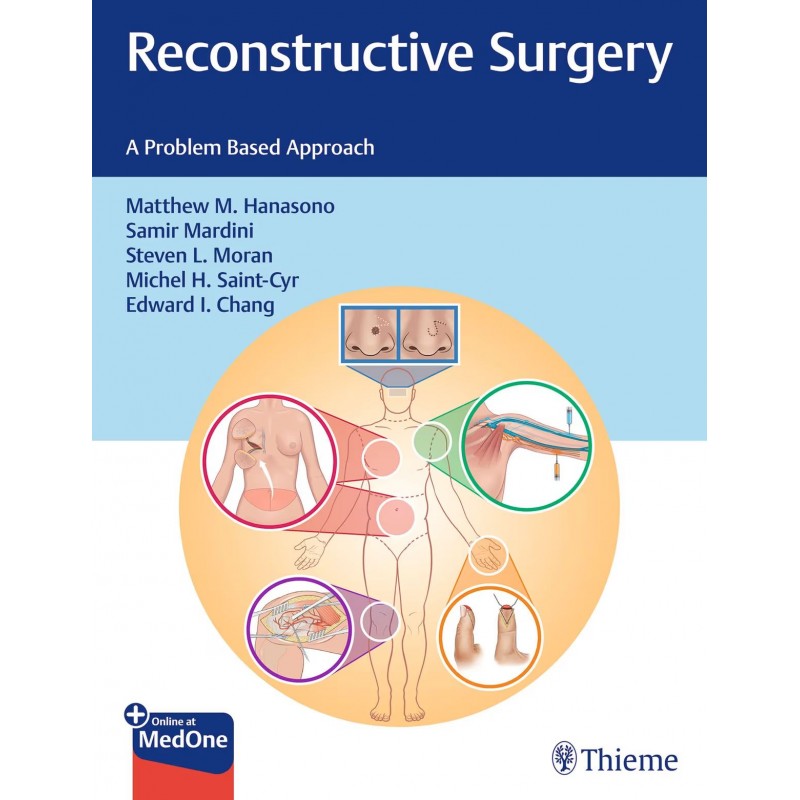
Reconstructive Surgery:: A Problem-Based Approach edited by Matthew M. Hanasono, Samir Mardini, Steven L. Moran, Michel H. Saint-Cyr, and Edward I. Chang fills a gap among plastic surgery textbooks. The book focuses on reconstructive surgery by region and is problem based, rather than a flap atlas or a superficial survey of general plastic surgery. The text covers the entire spectrum of reconstructive surgery, including reconstruction of the head and neck; breast, trunk, and pelvis; upper and lower extremities; and the lymphatic system.
Systemically organized by five regions, the book includes 52 chapters designed to be referenced prior to a consultation or surgical case. Each chapter is succinct, yet comprehensive, and written by world-renowned experts in the field. The authors discuss clinical decision-making using the best available evidence. This unique resource defines the current state of the art and reflects the camaraderie and mutual support that runs strongly within the field of reconstructive plastic surgery.
Key Highlights
This comprehensive, practical, and authoritative textbook provides an essential portable companion for all trainee and seasoned surgeons to consult in the clinic, operating room, or during late-night call.
This print book includes a scratch off code to access a complimentary digital copy on MedOne.
Publishers Note:: Products purchased from Third Party sellers are not guaranteed by the publisher for quality, authenticity, or access to any online entitlements included with the product.
Data sheet
Part I: Head and Neck
1 Preoperative Considerations in Head and Neck Reconstruction
2 Scalp, Forehead, and Calvarial Reconstruction
3 Tongue Reconstruction
4 Mandible Reconstruction
5 Pharyngeal and Esophageal Reconstruction
6 Pedicled Flaps in Head and Neck Reconstruction
7 Midfacial Reconstruction
8 Nasal Reconstruction
9 Eyelid Reconstruction
10 Skull Base Reconstruction
11 Facial Reanimation
12 Facial Transplantation
Part II: Breast
13 Preoperative Considerations and Algorithm in Autologous and Implant-Based Breast Reconstruction
14 Autologous Reconstruction in the High-BMI Patient
15 Autologous Reconstruction in the Thin (Low-BMI) Patient
16 Breast Reconstruction in the Irradiated Patient
17 Partial Breast Reconstruction
18 Salvage Breast Reconstruction after Failed Breast Implant
19 Correction of the Unsatisfactory Implant-Based Breast Reconstruction
20 Correction of the Unsatisfactory Autologous-Based Breast Reconstruction
21 Prevention and Management of Complications Following Autologous Abdominal-Based Breast Reconstruction
22 Management of Venous and Arterial Compromise, Both Acute and Delayed, in Autologous Breast Reconstruction
Part III: Trunk/Pelvis
23 Sternal Wound Reconstruction
24 Chest Wall and Thoracic Reconstruction
25 Abdominal Wall Reconstruction
26 Pedicled and Free Flaps in Abdominal Wall Reconstruction
27 Pressure Wounds: Reconstructive Techniques and Special Considerations
28 Pelvic and Genital Reconstruction
29 Male-to-Female Gender Confirming Surgery
Part IV: Extremity
30 Lower Extremity Trauma: Upper and Middle Third
31 Lower Extremity Trauma: Foot and Ankle
32 Bone Loss in Lower Extremity
33 Upper Extremity Soft Tissue Reconstruction in the Forearm and Hand
34 The Management of Upper Extremity Bone Loss
35 Upper Extremity Tendon Transfer
36 Acute Nerve Injuries
37 Chronic Nerve Injuries
38 Thumb Reconstruction
39 Hand and Upper Limb Replantation
40 Digital Replantation
41 Hand Transplantation
42 Vascular Disorders of the Hand
43 Tendon Repair and Reconstruction within the Hand
44 Phalangeal Fractures
45 Wrist and Distal Radius Fractures
Part V: Lymphatics
46 The Mutilated Hand
47 Preoperative Considerations: Tools for Evaluating the Lymphedema Patient
48 Lymphedema: Pathophysiology, Evaluation, and Treatment Algorithm
49 Vascularized Lymph Node Transfer for Lymphedema
50 Immediate Lymphatic Reconstruction
51 Management of the Severe Patient: Nonmicrovascular Surgery for Lymphedema
52 Controversies in Lymphedema Surgery