
• Order to parcel locker

    Order to parcel locker
  • easy pay

    easy pay
  • Reduced price
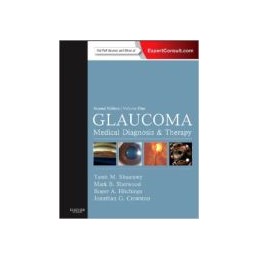
Glaucoma

Glaucoma

9780702051937
1,688.35 zł
1,435.10 zł Save 253.25 zł Tax included
Lowest price within 30 days before promotion: 1,435.10 zł
Quantity
Available in 4-6 weeks

  Delivery policy

Choose Paczkomat Inpost, Orlen Paczka, DHL, DPD or Poczta Polska. Click for more details

  Security policy

Pay with a quick bank transfer, payment card or cash on delivery. Click for more details

  Return policy

If you are a consumer, you can return the goods within 14 days. Click for more details

Description

As the irreversible effects of glaucoma can lead to blindness, there is high demand for early diagnosis and an ongoing need for practitioners to adopt new and evolving medical and surgical treatment options to improve patient outcomes. Glaucoma, Second Edition is the most comprehensive text and online resource in the field delivering expert guidance for the most timely and effective diagnosis and treatment of glaucoma - aimed at specialists, fellows and general ophthalmologists. More than 300 contributors from six continents provide a truly global perspective and explore new approaches in this user friendly reference which has been updated with enhanced images, more spotlights, new videos, and more.

Product Details
54885
9780702051937
9780702051937

Data sheet

Publication date
2014
Issue number
2
Cover
paperback
Pages count
1416
Dimensions (mm)
219 x 276
Weight (g)
4990
  • Section 1 Glaucoma in the World
    1 Prevalence and Geographic Variations
    2 Screening for glaucoma
    3 Economics of glaucoma care
    4 Glaucoma Care in Different Societies

    Section 2 Pathogenesis
    5 Aqueous humor outflow pathways
    6 Aqueous Humor Dynamics and Intraocular Pressure Elevation
    7 Pathogenesis of glaucomatous optic neuropathy
    8 Mechanical Strain and Restructuring of the Optic Nerve Head
    9 Role of Vascular Blood Flow in the Pathogenesis of Glaucoma

    Section 3 Evaluation of Glaucoma
    10 Tonometry and Intraocular Pressure Fluctuation
    11 Visual Fields
    12 Long Term Follow-Up Visual Fields
    13 Function specific perimetry
    14 Electrophysiology in Glaucoma Assessment
    15 Gonioscopy
    16 Ultrasound Biomicroscopy
    17 Angle Imaging: Ultrasound Biomicroscopy and Anterior Segment Optical Coherence Tomography
    18 The Impact of Central Corneal Thickness and Corneal Biomechanics on Tonometry
    19 Optic Disc Photography in the Diagnosis of Glaucoma
    20 Optic Disc Imaging
    21 Retinal Nerve Fiber Layer Photography and Computer Analysis
    22 Structure and function relationships in glaucoma
    23 Measuring glaucoma progression in clinical practice
    24 Techniques Used for Evaluation of Ocular Blood Flow
    25 Genetics of Glaucoma
    26 Genetic Epidemiology

    Section 4 Types of Glaucoma
    27 Definitions - What is Glaucoma Worldwide?
    28 Ocular Hypertension
    29 Primary Open-Angle Glaucoma
    30 Primary Angle-Closure Glaucoma
    31 Exfoliation syndrome and exfoliative glaucoma
    32 Iridotomy for Pigmentary Glaucoma
    33 Normal Tension Glaucoma
    34 Childhood Glaucomas
    35 Secondary Angle-Closure Glaucoma
    36 Uveitic Glaucoma
    37 Neovascular Glaucoma
    38 Other Secondary Glaucomas
    39 Post-traumatic Glaucomas
    40 Glaucoma and Intraocular Tumors
    41 Glaucoma in the Phakomatoses and Related Conditions

    Section 5 Principles of Management
    42 Overview of Management of Ocular Hypertension and Primary Open-angle Glaucoma
    43 Management of normal tension glaucoma
    44 An Overview of Angle-Closure Management
    45 Target Intraocular Pressure
    46 Quality of Life
    47 Medical management of glaucoma: Cost-effectiveness
    48 Optimizing Quality of Life: Low-vision Rehabilitation in Glaucoma
    49 Ocular Hypotensive Medications: Adherence and Persistence
    50 Outcomes
    51 Benefit Versus Risk

    Section 6 Medical Therapy
    52 Prostagladin Analogues
    53 Beta-blockers
    54 Carbonic anhydrase inhibitors
    55 Alpha Agonists
    56 Parasympathomimetics
    57 Fixed combination therapies in glaucoma
    58 Ocular surface disease and role preservatives free drops

    Section 7 Emergency Care Management
    59 Acute Intraocular Pressure Rise
    60 Glaucoma Secondary to Trauma
    Section 8 New Horizons
    61 Neuroprotection and Neuroregeneration
    62 Interpreting Clinical Studies on Glaucoma Neuroprotection
    63 Stem Cells: A Future Glaucoma Therapy
    64 Gene Therapy in Glaucoma
    65 Ultrastructural Imaging

    Volume II
    Section 9 Introduction

    66 Economics of Surgery Worldwide: Developed countries
    67 When to perform glaucoma surgery
    68 Economics of Surgery Worldwide: Developing countries
    69 Lowering Intraocular Pressure: Surgery versus Medications
    70 The Trabecular Meshwork Outflow Pathways: Surgical Aspects

    Section 10 Laser Therapy
    71 Selective Laser Trabeculoplasty
    72 Peripheral Iridotomy for Angle-Closure Glaucoma
    73 Laser Peripheral Iridoplasty

    Section 11 Trabeculectomy
    74 Preoperative Evaluation and Diagnostic Approach
    75 Preoperative Conjunctival Health and Trabeculectomy Outcome
    76 Ophthalmic Anesthesia
    77 Trabeculectomy
    78 Wound Healing and Bleb Evaluation after Trabeculectomy
    79 Intraoperative Complications of Trabeculectomy
    80 Early Postoperative Increase in Intraocular Pressure
    81 Postoperative Shallow Anterior Chamber
    82 Choroidal Effusion
    83 Trabeculectomy related Corneal complications
    84 Aqueous Misdirection
    85 Late Failure of Filtering Bleb
    86 Late Bleb Leaks
    87 Blebitis and Endophthalmitis
    88 Late Hypotony
    89 Cataract following trabeculectomy

    Section 12 Modulation of Wound Healing
    90 Risk factors for excess wound healing
    91 Choice of antifibrosis therapies
    92 Technique
    93 Complications Associated with Modulation of Wound Healing in Glaucoma Surgery
    94 Biological Drivers of Postoperative Scarring
    95 Future Strategies

    Section 13 Non-Penetrating Glaucoma Surgery
    96 Principle and Mechanism of Function
    97 Deep Sclerectomy
    98 Viscocanalostomy
    99 Complications of Nonpenetrating Glaucoma Surgery
    100 Postoperative Management of Nonpenetrating Glaucoma Surgery
    101 Results of NPGS

    Section 14 Management of Co-Existing Cataract and Glaucoma
    102 Cataract Surgery in Open Angle Glaucoma
    103 Cataract surgery closed angle design
    104 Cataract Surgery in Patients with Functioning Filtering Blebs
    105 One-site Combined Surgery/Two-site Combined Surgery
    106 Combined cataract extraction and glaucoma drainage implant surgery
    107 Combined Cataract and Non-penetrating Glaucoma Surgery
    108 Goniosynechialysis

    Section 15 Drainage Devices
    109 Preoperative Evaluation of Patients Undergoing Drainage Implant Surgery
    110 Aqueous Shunts: Choice of Implant
    111 Surgical Technique 1 (Molteno Glaucoma Implant)
    112 Surgical Technique 2 (Baerveldt Glaucoma Implant)
    113 Surgical Technique 3 (Ahmed Glaucoma Valve Drainage Implant)
    114 Other Glaucoma Implants
    115 Intraoperative Complications
    116 Postoperative Complications
    117 Glaucoma Implants: Results
    118 Aqueous Shunts after Retinal Surgery
    119 Aqueous Shunts and Keratoplasty

    Section 16 Surgery for Congenital Glaucoma
    120 Goniotomy and Trabeculotomy
    121 Further Surgical Options in Children

    Section 17 Cyclodestructive Procedures
    122 Cyclodestructive Techniques
    123 Endophotocoagulation
    124 Complications of Cyclodestructive Procedures

    Section 18 Devices in Development and New Procedures
    125 Trabectome
    126 The Ex-PRESST Miniature Glaucoma Implant
    127 Canaloplasty
    128 Devices in Development and New Procedures
Comments (0)