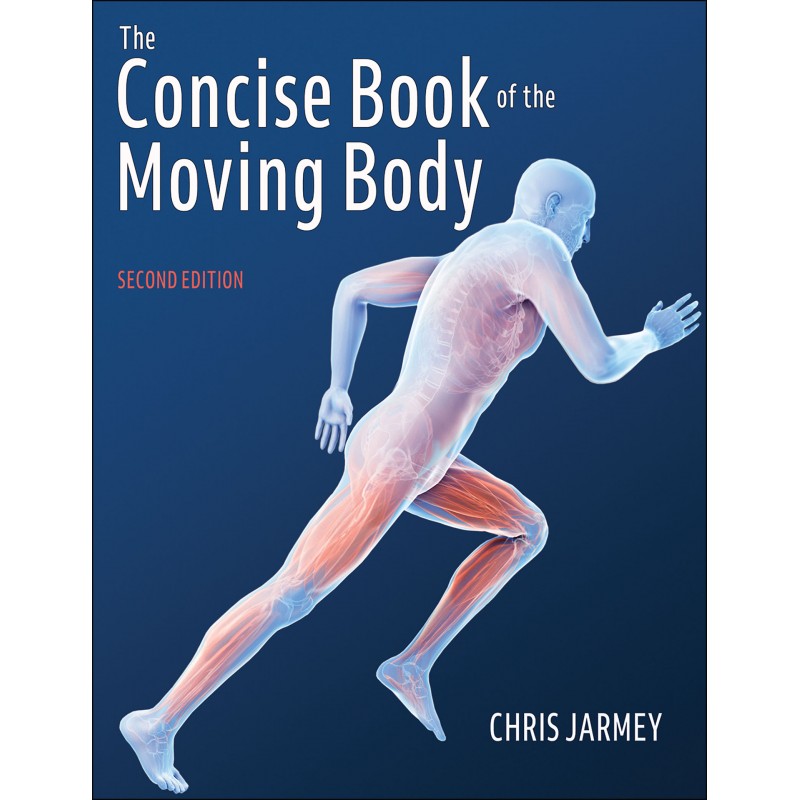
Explore the musculoskeletal system, joints, and nerves with full-color illustrations.
The Concise Book of the Moving Body, Second Edition, details human anatomy, including the musculoskeletal system, joints, nerves, and everyday movements. The text is fully illustrated, with more than 500 full-color drawings, making it a perfect resource for movement-oriented therapists, students, and athletes.
The Concise Book of the Moving Body is broken down into nine easily digestible chapters, covering anatomical terms, tissues, bones, the axial and appendicular skeletons, joints, peripheral nerve supply, the musculoskeletal system, and the musculoskeletal system in everyday life. In addition to anatomical illustrations, color tables list each muscles origin, insertion, nerve, and action.
The second edition has been updated with the addition of two new chapters. Chapter 7 focuses on the peripheral nervous system. Throughout the chapter, the relevant somatic peripheral nerve is listed with each muscle. In addition to nerve origin, the clinical significance of important nerves is explained.
Chapter 9 addresses the functional musculoskeletal system, focusing on the anatomy that controls basic movements required for everyday activities, such as sitting, standing, walking, and running.
While designed for the student and beginning practitioner of anatomy, massage, bodywork, physical therapy, chiropractic medicine, physiotherapy, yoga, and Pilates, this second edition of The Concise Book of the Moving Body is equally useful for athletes and anyone interested in the workings of the human body.
Chapter 3. Bones Bone Development and Growth Cartilage Functions of Bones Types of Bone-According to Density Types of Bone-According to Shape Components of a Long Bone Bone Markings
Chapter 4. The Axial Skeleton The Skull, Comprising the Cranium and the Facial Bones The Vertebral Column (Spine) The Bony Thorax
Chapter 5. The Appendicular Skeleton The Pectoral Girdle The Upper Limb The Pelvic Girdle (Os Innominatum) The Lower Limb General Skeletal Interrelationships Bony Landmarks Seen or Felt Near the Body Surface
Chapter 6. Joints Part One-Classification of Joints Part Two-Features of Specific Joints Joints of the Head and Vertebral Column Joints of the Ribs and Sternum Joints of the Shoulder Girdle and Upper Limb Joints of the Pelvic Girdle and Lower Limb
Chapter 8. The Musculoskeletal System Structure and Function of Skeletal Muscle Musculoskeletal Mechanics Muscle Library
Chapter 9. The Musculoskeletal System in Everyday Life Introduction Sitting Down Sitting to Standing Standing Upright Walking Walking up Stairs Running and Sprinting References
Comments (0)
Your review appreciation cannot be sent
Report comment
Are you sure that you want to report this comment?
Report sent
Your report has been submitted and will be considered by a moderator.



 Delivery policy
 Security policy
 Return policy