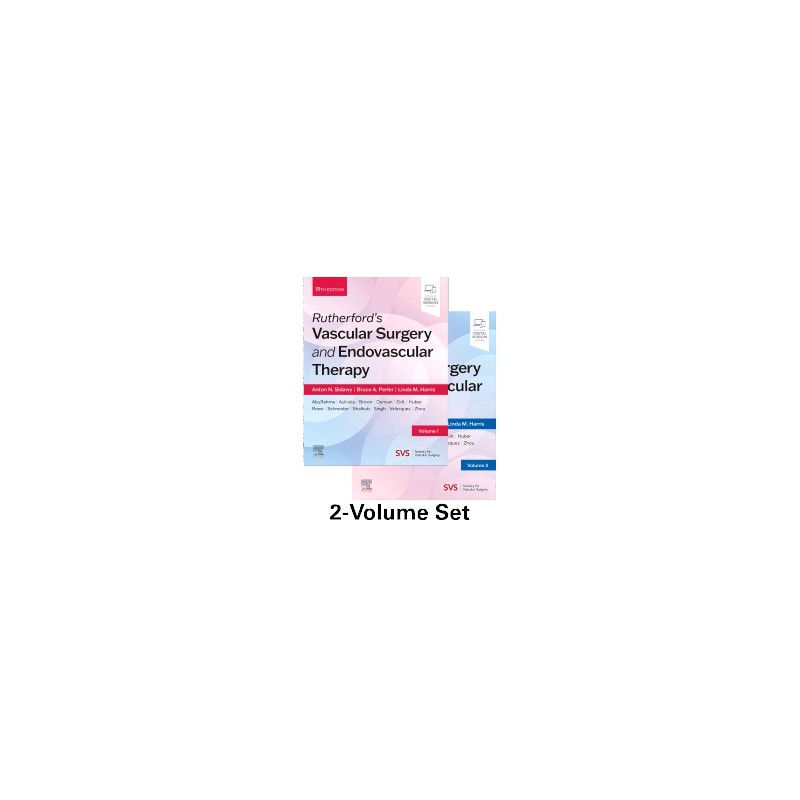
Published in association with the Society for Vascular Surgery, Rutherfords Vascular Surgery and Endovascular Therapy, 11th Edition, is quite simply the most complete and most reliable resource available on the art and science of circulatory diseases. This highly regarded, two-volume reference shares the knowledge and expertise of the most respected and innovative global thought leaders and clinical and basic science experts of our time, under the expert editorial guidance of Dr. Anton N. Sidawy, Dr. Bruce A. Perler, and new editor, Dr. Linda M. Harris. Now with an increased emphasis on endovascular therapies, advanced vascular imaging, and modalities such as angiography, CT, and MRI, the newly revised Rutherford’s continues to set the standard for this fast-changing, increasingly multidisciplinary specialty.
Section 1. Basic Science 1. Epidemiology and Research Methodology 2. Embryology and Developmental Anatomy 3. Vessel Wall Biology 4. Atherosclerosis 5. Intimal Hyperplasia 6. Ischemia-Reperfusion 7. Arteriogenesis and Angiogenesis 8. Arterial Hemodynamics 9. Venous Pathophysiology 10. Lymphatic Pathophysiology
Section 2. Atherosclerotic Risk Factors 11. Smoking 12. Diabetes 13. Hyperlipidemia 14. Hypertension 15. Familial Arteriosclerosis 16. Less Commonly Considered Causes of Atherosclerosis 17. International and Ethnic Trends in Vascular Disease
Section 3. Clinical and Vascular Laboratory Evaluation 18. Noninvasive Vascular Laboratory Quality Assurance and Accreditation 19. Clinical Evaluation of the Arterial System 20. Clinical Evaluation of the Venous and Lymphatic Systems 21. Vascular Laboratory: Arterial Physiologic Assessment 22. Vascular Laboratory: Arterial Duplex Scanning 23. Techniques to Assess Tissue Perfusion in Peripheral Arterial Occlusive Disease 24. Vascular Laboratory: Venous Physiologic Assessment 25. Vascular Laboratory: Venous Duplex Scanning
Section 4. Vascular Imaging 26. Radiation Safety 27. Arteriography 28. Venography 29. Computed Tomography 30. Magnetic Resonance Imaging and Arteriography 31. Vascular PET/CT and SPECT/CT 32. Intravascular Ultrasound 33. The Future of Imaging for Endovascular and Open Surgery
Section 5. Perioperative Care 34. Preoperative Evaluation and Management 35. Intraoperative Management 36. Postoperative Management 37. Hospital Readmissions in Vascular Surgery
Section 6. Bleeding and Clotting 38. Normal Coagulation 39. Disorders of Coagulation: Hemorrhage 40. Disorders of Coagulation: Hypercoagulable States 41. Anticoagulant Therapy 42. Antiplatelet Agents 43. Thrombolytic Agents
Section 7. Complications 44. Systemic Complications: Cardiac 45. Systemic Complications: Respiratory 46. Systemic Complications: Renal 47. Systemic Complications: Neurologic 48. Graft Thrombosis 49. Graft Infection 50. Anastomotic Aneurysms 51. Local Complications: Aortoenteric Fistula 52. Local Endovascular Complications and their Management 53. Venous Complications 54. Local Complications: Lymphatic
Section 9. Grafts and Devices 65. Autogenous Grafts (Including Vein Harvest, Surgical and Endoscopic) 66. Prosthetic Grafts 67. Biologic Grafts 68. Bioengineered Vascular Grafts 69. Nonaortic Stents and Stent Grafts 70. Novel and Evolving Aortic Endovascular Devices
Section 10. Abdominal Aortic and Iliac Aneurysms 71. Arterial Aneurysms: Etiology, Epidemiology, and Natural History 72. Aortoiliac Aneurysms: Evaluation, Decision Making, and Medical Management 73. Abdominal Aortic Aneurysms: Open Surgical Treatment 74. Endovascular Aneurysm Repair Techniques 75. Aortoiliac Aneurysms: Endovascular Treatment 76. Ruptured Aortoiliac Aneurysms and their Management 77. Isolated Iliac Artery Aneurysms and their Management
Section 11. Thoracic and Thoracoabdominal Aortic Aneurysms and Dissections 78. Thoracic and Thoracoabdominal Aortic Aneurysms: Etiology, Epidemiology, Natural History, Medical Management, and Decision Making 79. Thoracic and Thoracoabdominal Aneurysms: Open Surgical Treatment 80. Thoracic Aortic Aneurysms: Endovascular Treatment 81. Aortic Stent Graft and Endovascular Treatment of Thoracoabdominal and Aortic Arch Aneurysms: Strategies for Operative Repair 82. Fenestrated and Branched Endograft Treatment of Juxtarenal, Paravisceral, Thoracoabdominal, and Aortic Arch Aneurysms: Device Selection and Technical Considerations 83. Aortic Dissection: Epidemiology, Pathophysiology, Clinical Presentation, and Medical and Surgical Management 84. Penetrating Aortic Ulcers
Section 13. Cerebrovascular Diseases 88. Cerebrovascular Disease: Epidemiology and Natural History 89. Cerebrovascular Disease: The Unstable Carotid Plaque 90. Carotid Artery Disease and Cognitive Functional Decline 91. Cerebrovascular Disease: Diagnostic Evaluation 92. Cerebrovascular Disease: Decision Making Including Optimal Medical Therapy 93. Carotid Endarterectomy 94. Carotid Artery Stenting 95. Endovascular Management of Large Vessel Occlusion in Acute Ischemic Stroke 97. Carotid Artery Aneurysms 98. Carotid Body Tumors 99. Unusual Carotid Artery Conditions 100. Vertebral Artery Dissection and Other Conditions 101. Brachiocephalic Artery Disease: Surgical Treatment 102. Brachiocephalic Artery Disease: Endovascular Management
Section 14. Acute Limb Ischemia 103. Acute Limb Ischemia: Evaluation, Decision Making, and Medical Treatment 104. Acute Limb Ischemia: Surgical and Endovascular Treatment 105. Compartment Syndrome and its Management 106. Atheromatous Embolization and its Management
Section 15. Lower Extremity Chronic Arterial Disease 107. Lower Extremity Arterial Occlusive Disease: Epidemiology and Natural History 108. Lower Extremity Arterial Disease: Decision Making and Medical Treatment 109. Aortoiliac Disease: Direct Reconstruction 110. Aortoiliac Disease: Open Extra-Anatomic Bypass 111. Aortoiliac Disease: Endovascular Treatment 112. Infrainguinal Disease: Surgical Treatment 113. Infrainguinal Disease: Endovascular Therapy 114. Lower Extremity Amputations: Epidemiology, Procedure Selection, and Rehabilitation Outcomes Chapter 115. Lower Extremity Amputations: Operative Techniques and Results
Section 16. The Diabetic Foot and its Management 116. General Considerations of Diabetic Foot Ulcers 117. Diabetic Foot Abnormalities and their Management 118. Wound Care 119. Podiatric and Vascular Teams
Section 27. Hemodialysis Access 174. Hemodialysis Access: General Considerations and Strategies to Optimize Access Placement 175. Hemodialysis Access: Complex 176. Hemodialysis Access: Dialysis Catheters 177. Hemodialysis Access: Failing and Thrombosed 178. Hemodialysis Access: Nonthrombotic Complications
Section 28. Vascular Trauma 179. Vascular Trauma: Epidemiology and Natural History 180. Vascular Trauma: Head and Neck 181. Thoracic Vascular Trauma 182. Vascular Trauma: Abdominal 183. Vascular Trauma: Extremity 184. Conditions Arising from Repetitive Trauma and Occupational Vascular Problems
Section 29. Special Issues in Pediatric Vascular Surgery 185. Special Techniques in Pediatric Vascular Surgery 186. Aortic and Arterial Aneurysms in the Pediatric Population 188. Vascular Trauma in the Pediatric Population 189. Placement of Arteriovenous Dialysis Access and Central Catheters in the Pediatric Patient 190. Acute Pediatric Arterial Occlusion
Section 30. Miscellaneous Conditions 191. Erectile Dysfunction 192. Complex Regional Pain Syndrome 193. Current Role of Sympathectomy (Upper and Lower) 194. Abdominal Vascular Tumors and their Management 195. Vascular Reconstruction in Oncologic Surgery 196. Chronic Exertional Compartment Syndrome
Section 31. Business of Vascular Surgery 197. Development of a Multispecialty Practice and Operation of Multispecialty Cardiovascular Centers 198. Development and Successful Operation of an Outpatient Vascular Center 199. Development and Operation of Outpatient Dialysis Access Centers 200. Alternative Payment Models in Vascular Surgery 201. Improving Quality and the Value of a Vascular Registry to the Practice 202. Health and Wellness for the Vascular Surgeon
Section 32. The Use of Technology Platforms and Social Media in Vascular Surgery 203. Online Branding and Marketing a Vascular Surgery Practice 204. Telemedicine in Vascular Surgery Practice 205. Internet-Based Surveillance of Vascular Disease and Reconstructions 206. Social Media in Vascular Surgery 207. The Quality and Fidelity of Vascular Information on the Internet Index
Komentarze (0)
Chwilowo nie możesz polubić tej opinii
Zgłoś komentarz
Czy jesteś pewien, że chcesz zgłosić ten komentarz?
Zgłoszenie wysłane
Twój komentarz został wysłany i będzie widoczny po zatwierdzeniu przez moderatora.





 Dostawa
 Płatność
 Zwroty