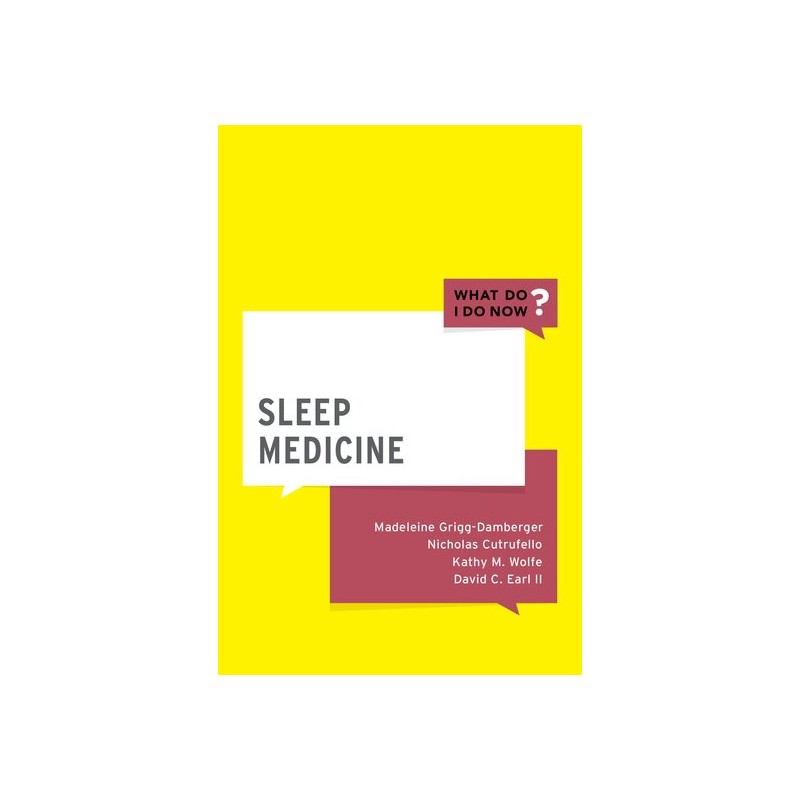
Sleep Medicine places one of the most essential yet frequently underestimated foundations of neurological health at the center of clinical practice:: sleep. Sleep is first and foremost a function of the brain, serving as a critical biological requirement for memory, emotional regulation, immune function, synaptic plasticity, glymphatic clearance, development, and prosocial behavior. Its influence extends across nearly every domain of neurological health and disease.This volume is the first in the What Do I Do Now? series devoted entirely to sleep disorders and their diagnosis and management by neurologists. Sleep disturbances affect almost every neurological condition-not merely as comorbid symptoms, but often as contributors to disease onset, progression, or misdiagnosis. In some cases, a sleep disorder may be the earliest manifestation of an underlying neurological illness. In others, disturbed sleep can worsen neurological outcomes or mimic primaryneurological disease.Through a collection of real-world, case-based scenarios spanning patients across all stages of life, Sleep Medicine illustrates how commonly sleep disorders present in neurological clinics and hospitals. These cases emphasize practical decision-making and clinical reasoning, guiding readers through recognition, evaluation, and treatment.Clear, focused, and clinically relevant, this book equips neurologists with the insight and confidence to address sleep disorders effectively-improving outcomes and quality of life for patients whose neurological health depends on restorative sleep.
Section 1: Diagnostic Questions; 1) Case 1: Recognizing Symptoms of Sleep Paralysis and Hypnic Hallucinations; 2) Case 2: Adverse Effects of Hypnotic-Sedative Medications; 3) Case 3: Symptoms of Obstructive Sleep Apnea; 4) Case 4: NREM Disorders of Arousal (DOA); 5) Case 5: Sleep Disorders Common in Craniopharyngioma Survivors Due to Hypothalamic Injury from Tumor and Its Treatment; 6) Case 6: Exploding Head Syndrome; 7) Case 7: Multi?System Atrophy with Inspiratory Stridor and REM Behavior Disorder; 8) Case 8: Sudden Onset of Hypersomnia and Hiccups.; 9) Case 9: Brain Fog and Difficulty Awakening from Long Sleep Periods; 10) Case 10: Positive Multiple Sleep Latency Test Results in the Setting of Positive Drug Test; 11) Case 11: Recurrent Bouts of Hypersomnia with Confusion, Disinhibition and Hyperphagia in an Adolescent; 12) Case 12: Obstructive Sleep Apnea Triggered or Worsened by Vagal Nerve Stimulation; 13) Case 13: PAP Tolerance and Ventilation in Central Congenital Hypoventilation Syndrome Changes with Age; 14) Case 14: ROHHAD Syndrome; 15) Case 15: Recognizing Red Flags for Untreated Obstructive Sleep Apnea in Older Adults; SECTION 2: TREATMENT CONSIDERATIONS; 16) Case 16: Jet Lag Disorder; 17) Case 17: Sleep-Related Eating Disorder Triggered by Zolpidem; 18) Case 18: Insomnia and Chronic Fatigue in Post-Menopausal Woman with Fibromyalgia: Will Cannabis Help?; 19) Case 19: Behavioral Insomnias of Infancy and Young Children; 20) Case 20: Recognizing Common Comorbidities in Adolescent Obstructive Sleep Apnea; 21) Case 21: Sleep Deprivation and Evening Chronotype Preference Predispose Juvenile Myoclonic Epilepsy to Seizures upon Awakening; 22) Case 22: Challenges of Treating Restless Leg Syndrome in Inflammatory Bowel Syndrome with Iron Deficiency Anemia; SECTION 3: QUESTIONS RELATED TO SPECIAL POPULATIONS; 23) Case 23: Sleep Disorders Often Initial Symptom of Autoimmune Encephalitis; 24) Case 24: Basketball Player Wonders if His Athletic Performance Will Improve with Better Sleep; 25) Case 25: Post-Partum Insomnia Associated with Increased Risk for Post-Partum Depression; 26) Case 26: Recognizing Clinical Presentation of Sleep Apnea due to Foramen Magnum Stenosis and Posterior Fossa Compression in Achondroplasia; 27) Case 27: Risks and Treatment of Obstructive Sleep Disordered Breathing in Pregnancy; SECTION 4: PROGNOSTIC, SOCIAL, BEHAVIORAL AND LEGAL ISSUES.; 28) Case 28: Sleep-Related Violence While Sleepwalking; 29) Case 29: Insomnia and Sleep Apnea Are Risk Factors for Alzheimers Disease and Dementia; 30) Case 30: Risk for Dementia and Alpha-Synucleinopathies with Isolated REM Sleep Behavior Disorder; 31) Case 31: Important to Consider Impact of Environment on Obstructive Sleep Apnea in Children; 32) Case 32: Night Shift Work, Long Sleep Duration and Risk of Breast Cancer in Women; 33) Case 33: Behaviorally Induced Delayed Sleep/Wake Phase Disorder Triggered by Video Game Addiction Disorder; 34) Case 34: Sexsomnia a Particularly Problematic NREM Arousal Disorder;
Komentarze (0)
Chwilowo nie możesz polubić tej opinii
Zgłoś komentarz
Czy jesteś pewien, że chcesz zgłosić ten komentarz?
Zgłoszenie wysłane
Twój komentarz został wysłany i będzie widoczny po zatwierdzeniu przez moderatora.




 Dostawa
 Płatność
 Zwroty