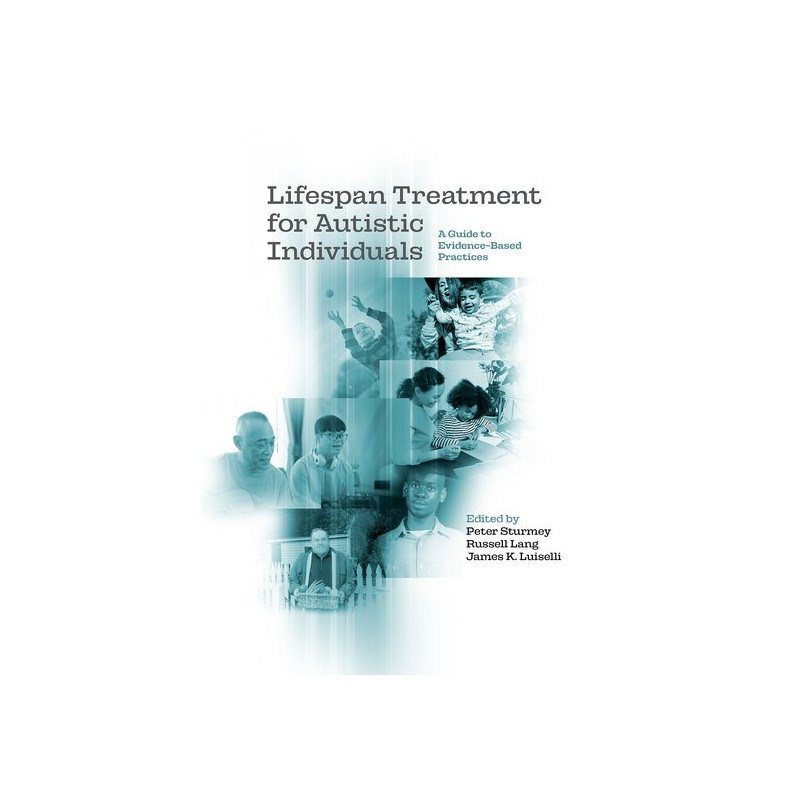
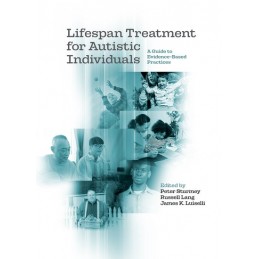
In a world filled with hundreds of Autism Spectrum Disorders (ASD) treatments, it is crucial to distinguish between evidence-based practices and ineffective and potentially harmful pseudoscientific approaches. For the former, we know what outcomes to expect, how to deliver procedures with fidelity and, ideally, costs of implementation versus benefits. Unfortunately, many treatments have not been similarly evaluated and the potential for wasted resources and direct harm to patientsremains unknown. Interpreting ASD treatment research is complicated by differences in research norms across disciplines, competing theoretical underpinnings, and misleading information available from media sources. Overall, these issues contribute to a gap between the outcomes demonstrated inscientific studies and what is achieved in applied settings (e.g., schools, homes and clinics).Lifespan Treatment for Autistic Individuals guides professional practitioners in the selection of treatments that are procedurally and ethically best suited for their individual clients. As systematic reviews, authoritative statements, and new practice guidelines continue to emerge but are usually nested within specific disciplines, this meticulously curated volume bridges the gap between scientific research and practical application in the realms of psychology, education, andmedicine. Chapter authors detail the application of included treatment approaches by providing a concise description, and essential elements and considerations for each option. Systematically identified treatment approaches are evaluated against EBP standards by recognized experts absent any proprietary orconflicting interests in the treatment. Within these pages, the editors offer content designed to empower a wide range of scholars, practitioners, and other stakeholders interested in enduring positive and efficient treatment outcomes for ASD.
Chapter 1. Lifespan Treatment of Autism Spectrum Disorder: Introduction; Peter Sturmey, Russel Lang, and James K. Luiselli; Chapter 2. Antecedent Interventions; Lee Kern, Elise Settanni, and Jennifer Croner Lauriello; Chapter 3. Differential Schedules of Reinforcement; Charlene N. Agnew, Mirela Cengher, and Henry Roane; Chapter 4. Prompting, Errorless Learning, Time Delay, and Reinforcement; David Ray Miranda, John Augustine, and & Mandy J. Rispoli; Chapter 5. Punishment-Based Behavioral Interventions; Olive Healy, Aoife McTiernan, Lorna Barry, Aoife Ryan, Jennifer Holloway, and Rhona Dempsey; Chapter 6. Response Interruption and Redirection; Haley M. K. Steinhauser, and William H. Ahearn; Chapter 7. Matched Stimulation; John T. Rapp, Daniel J. Sheridan, and Ashley N. Anderson; Chapter 8. Imitation-based Interventions: Modeling, Video Modeling, Self-Modeling; Reem Muharib and Elizabeth Reyes; Chapter 9. Behavioral Skills Training; Raymond G. Miltenberger, Jennifer L. Cook, and Rasha R. Baruni; Chapter 10. Self-Management Interventions; Amarie Carnett, Sophia Kennedy, and Siobhan Gardner; Chapter 11. Functional Communication Training; Jennifer Hamrick and Terry S. Falcomata; Chapter 12 . Discrete Trial Teaching; Mary Jane Weiss, Julia L. Ferguson, Alan Kinsella, Eilis OConnell-Sussman, & and Britany Melton; Chapter 13. Enhanced Milieu Teaching; Ashley E. Hinten, Cara E. Petrofes, and Laurie McLay; Chapter 14. Early Intensive Behavioral Intervention for Autism; Lily Stadlober, Angela Arnold-Saritepe, Katrina Phillips, Rebecca Sharp, Victor Rodriguez Garcia, Eric Larsson, Aida Tarifa-Rodriguez, Suzanne C. Purdy, and Javier Virues-Ortega; Chapter 15. Pivotal Response Treatment; Lynn Kern Koegel, and Fereshteh Mohammadzaheri; Chapter 16. Naturalistic Developmental Behavioral Interventions; Kyle M. Frost, Diondra Straiton, Sarah R. Edmunds, Melissa Maye, and Katherine Pickard; Chapter 17. LEAP Preschool; Phillip S. Strain, and Edward Bovey; Chapter 18. Promoting the Emergence of Advanced Knowledge:; Relational Training System (PEAK); Jordan Belisle, Yi Zhihui, Meredith Matthews, and Mark R. Dixon; Chapter 19. Social Skills Training; Erin Kang, Mary Isaac Cargill, Sadaf Khawar, Britney Jeyanayagam, Rachel G McDonald, and Matthew D. Lerner; Chapter 20. Exposure Therapy for Anxiety or Obsessive-Compulsive Disorders Adapted for Autism Spectrum Disorder; Johann M. DSouza, Allie N. Townsend, Kristen H. Erps, Leandra N. Berry, Sophie C. Schneider, Andrew G. Guzick, and Eric A. Storch; Chapter 21. Acceptance and Commitment Training; Thomas G. Szabo, and Celia Heyman; Chapter 22. Mindfulness and Mindfulness-Based Interventions; Yoon-Suk Hwang and Nirbhay N. Singh; Chapter 23. Anger Management and Autism Spectrum Disorders; Peter Sturmey; Chapter 24. Robotics and Virtual Learning; Matthew Roberts, An-An Chang, Eric McCoy, Hunter King, Aaron J Fischer and Ellie Kazemi; Chapter 25. Movement-based Interventions; Sudha M. Srinivasan, and& Deborah J. Bubela; Chapter 26. Music Therapy; Marc J. Lanovaz, Ioulia Koniou, and& Eve-Marie Quintin; Chapter 27. Multisensory Environments; Jennifer Stephenson and, & Mark Carter; Chapter 28. Alpha Two Agonists in Autism Spectrum Disorder; Erin A. Henneberry and, & Craig A. Erickson; Chapter 29. Mood Stabilizers Aand Antiepileptics; Shoumitro (Shoumi) Deb, Meera Roy, and& Bharati Limbu; Chapter 30. Melatonin for Sleep Problems; Camille Blouet, Edgar Moussaoui, and Fabian Guenole ; Chapter 31. Naltrexone and Self-Injury: Yesterdays Miracle Drug May Still Sometimes Be Helpful; Peter Sturmey; Chapter 32. Secretin: The Unfulfilled Promise; Beth Johnson, Mark Bellgrove, and Katrina Williams; Chapter 33. Cannabis; Laura Fusar-Poli, Cecilia Guiot, Davide Marisca, Udi Yehuda Levi, Pierluigi Politi, and Natascia Brondino; Chapter 34. Dietary Interventions for Treating Symptoms Associated with Autism Spectrum Disorder; Haifa Batarseh, Suhad AbuMweis, and Janet DeLany; Chapter 35. Electroconvulsive Therapy; Lee E. Wachtel and James K. Luiselli; Chapter 36. Research-Based Professional Development for Educators who Teach Students on the Autism Spectrum; Matthew E. Brock; Chapter 37. Parent Training and Family Support; Kelly M. Schieltz, Matthew J. OBrien, Jessica E. Graber, and Alyssa N. Suess; Chapter 38. Ineffective and Harmful Treatments; Elizabeth M. Kryszak and& James A. Mulick;
Komentarze (0)
Chwilowo nie możesz polubić tej opinii
Zgłoś komentarz
Czy jesteś pewien, że chcesz zgłosić ten komentarz?
Zgłoszenie wysłane
Twój komentarz został wysłany i będzie widoczny po zatwierdzeniu przez moderatora.




 Dostawa
 Płatność
 Zwroty