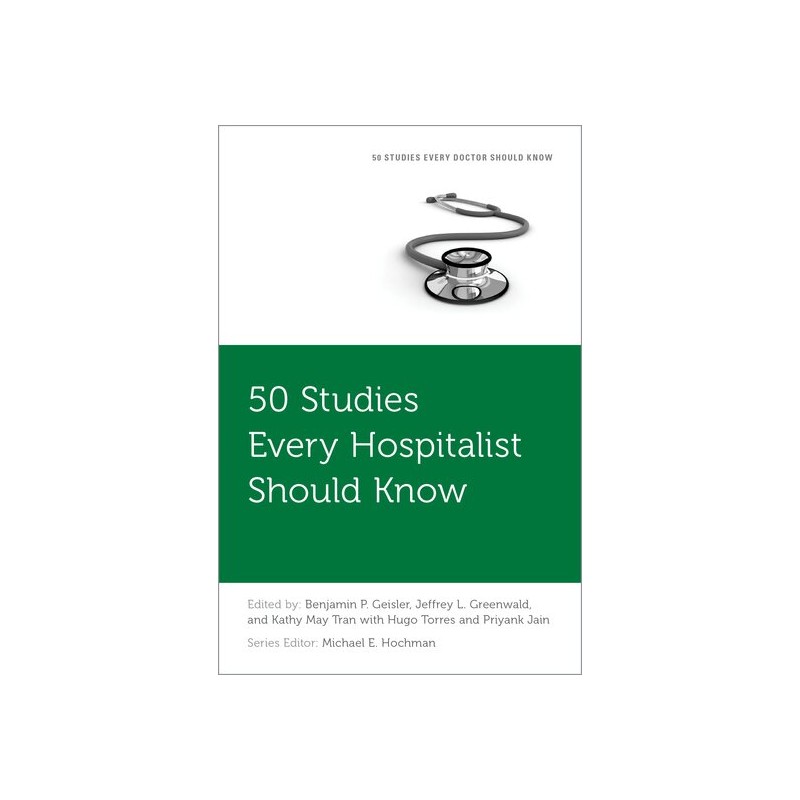
Hospital medicine is rapidly growing, driven by the increasing complexity of acutely ill patients and efficiency considerations. The field has expanded significantly, with over 60,000 hospitalists in the United States, including physicians, nurse practitioners, and physician assistants. These professionals face endless diagnostic dilemmas and management options for ever more complex patients, as well as administrative pressure to improve care quality while controlling costs.Pay-for-performance incentives and medicolegal requirements further emphasize the need for current evidence-based management. Specialty societies provide evidence-based guidelines for clinical care. However, managing individual patients on a general medicine service often requires detailed knowledge of key studies to determine if guidelines or meta-analyses are applicable. Understanding study populations and treatment effect sizes is crucial for making personalized management decisions and guiding patients and caregivers. 50 Studies Every Hospitalist Should Know introduces readers to pivotal articles that impact daily clinical practice and inform management recommendations. The book highlights essential details of each study, helping readers assess strengths and limitations not evident in guidelines and reviews. This knowledge aids providers in selecting therapeutic strategies and advising patients and families. The selected studies are high-yield and relevant to hospitalists everyday decisions. Thebook is also a valuable teaching tool for trainees, illustrating evidence-based medicine and its application to patient cases.
SECTION 1: NEUROLOGY & PSYCHIATRY ; Chapter 1 Detecting delirium: The CAM study; Benjamin P. Geisler, MD, MPH; Chapter 2 Delirium prevention in older hospitalized patients: The Elder Life Program Trial; Mobola Campbell, MD, MPH, MEd; Chapter 3 Patent foramen ovale closure for cryptogenic stroke: The REDUCE Trial; Hugo Torres, MD, MPH; Chapter 4 Thrombolysis timing in acute ischemic stroke: The ECASS III Trial; Jillian M. Berkman, MD and Mark Etherton, MD, PhD; Chapter 5 Symptom-triggered vs fixed-schedule benzodiazepines for alcohol withdrawal; Rahul B. Ganatra, MD, MPH; Chapter 6 Education and naloxone distribution to prevent opioid overdoses; Victoria D. Powell, MD and Pooja Lagisetty, MD; SECTION 2: CARDIOLOGY ; Chapter 7 Peri-operative risk for myocardial infarction or cardiac arrest; Jeffrey L. Greenwald, MD; Chapter 8 Perioperative beta blockers for non-cardiac surgery; Jeffrey L. Greenwald, MD; Chapter 9 Heparin vs. enoxaparin for unstable coronary artery disease: The ESSENCE trial; Bradford A. Hilson, MD; Chapter 10 Early invasive management for non-ST segment elevation acute coronary syndrome: The TACTICS-TIMI-18 Trial; Cian P. McCarthy, MB, BCH, BAO, SM; Chapter 11 Dual antiplatelet therapy for non-ST segment elevation acute coronary syndromes: The Cure Trial; Cian P. McCarthy, MB, BCH, BAO, SM; Chapter 12 Intensive vs moderate-intensity statins after acute coronary syndromes: The PROVE IT-TIMI 22 Trial; Nilay K. Patel, MD; Chapter 13 Loop diuretics for decompensated heart failure: The DOSE Study; Debbie Lin Teodorescu, MD, MEng, AM and Hugo Torres, MD, MPH; Chapter 14 Angiotensin receptor-neprilysin inhibition in heart failure: The PARADIGM-HF Trial; Peyton Hanson, MD and Kathleen M. Finn MD, MPhil; Chapter 15 Estimating risk of stroke in atrial fibrillation: The CHADS2 Trial; Yichi Zhang MD, MBA, Christopher S. Schenck, MD, and David M. Dudzinski, MD; Chapter 16 Apixaban vs. warfarin for atrial fibrillation: The ARISTOTLE trial; Priyank Jain, MBBS; SECTION 3: PULMONOLOGY & CRITICAL CARE ; Chapter 17 Procalcitonin-guided antibiotic use in lower respiratory tract infection; Philipp Schuetz, MD, MPH; Chapter 18 Early discontinuation of antibiotics for community-acquired pneumonia; Kathy May Tran, MD; Chapter 19 Glucocorticoids in exacerbations of chronic obstructive pulmonary disease: The REDUCE Trial; Mobola Campbell, MD, MPH, MEd and Jeffrey L. Greenwald, MD; Chapter 20 Noninvasive ventilation for exacerbations of chronic obstructive pulmonary disease; Raymond C. Parrish II, MD; Chapter 21 Clinical criteria and D-dimer to exclude pulmonary embolism: The Wells Criteria; Jeffrey L. Greenwald, MD; Chapter 22 Point-of-care ultrasound in acute respiratory failure: The BLUE Protocol; Thomas F. Heyne, MD, MSt and Kathy May Tran, MD; Chapter 23 Low tidal volume ventilation in acute respiratory distress syndrome: The ARMA Trial; Raymond C. Parrish II, MD; Chapter 24 Fluid management in acute respiratory distress syndrome: The FACTT Trial; Dominik J. Hoechter, MD; Chapter 25 Dopamine vs. norepinephrine for shock: The SOAP II Trial; Benjamin P. Geisler, MD, MPH; Chapter 26 Protocol-based care for septic shock: The ProCESS Trial; Benjamin P. Geisler, MD, MPH; Chapter 27 Targeted temperature management after cardiac arrest: The TTM Trial; Christy N. Taylor, MD, MPH and Jonathan Ludmir, MD; SECTION 4: GASTROENTEROLOGY; Chapter 28 Fecal transplant for recurrent Clostridiodes difficile infection; Farrin A. Manian, MD, MPH; Chapter 29 Antibiotic prophylaxis in cirrhosis and upper gastrointestinal bleeding; Farrin A. Manian, MD, MPH; Chapter 30 Endoscopic variceal ligation and nadolol to prevent variceal rebleeding; Rahul B. Ganatra, M.D., MPH; Chapter 31 Albumin for spontaneous bacterial peritonitis in cirrhosis; Bradford A. Hilson, MD; SECTION 5: HEMATOLOGY & ONCOLOGY ; Chapter 32 Risk for venous thromboembolism in hospitalized patients: The Padua Prediction Score; Rahul B. Ganatra, MD, MPH; Chapter 33 Low-molecular weight vs. unfractionated heparin for pulmonary embolism; William C. Hillmann, MD, MS; Chapter 34 Low-molecular weight heparin vs. oral vitamin K antagonist for cancer-associated venous thromboembolism: The CLOT Trial; Marko Velimirovic, MD, MMSc and Hugo Torres, MD, MPH; Chapter 35 Perioperative anticoagulation for atrial fibrillation: The BRIDGE Trial; Priyank Jain, MBBS; Chapter 36 Bleeding risk from anticoagulation in atrial fibrillation: HAS-BLED; Jeffrey L. Greenwald, MD; Chapter 37 Transfusion thresholds in critically ill patients: The TRICC Trial; Jeffrey L. Greenwald, MD; Chapter 38 4 Ts Score to exclude heparin-induced thrombocytopenia; Jeffrey L. Greenwald, MD; Chapter 39 Early palliative care for metastatic cancer; Mobola Campbell, MD, MPH, MEd and Kathy May Tran, MD; SECTION 6: FLUIDS, NUTRITION, & METABOLISM ; Chapter 40 Timing of parenteral nutrition in critically ill patients: The EPaNIC Study; Mobola Campbell, MD, MPH, MEd and Katharine E. Black, M.D.; Chapter 41 Early nasoenteric tube feeding in acute pancreatitis: The PYTHON Trial; Margaret M. Chapman, MD; Chapter 42 Glucose control in critically ill patients: The NICE-SUGAR Trial; Hugo Torres, MD, MPH; Chapter 43 Zoledronic acid after hip fracture: The HORIZON-RFT Trial; Hugo Torres, MD, MPH and Kathy May Tran, MD; SECTION 7: HOSPITAL SYSTEMS & OPERATIONS ; Chapter 44 Unconscious bias in referrals for cardiac catheterization; William J. Tate, MD and Sherri-Ann M. Burnett-Bowie, MD, MPH; Chapter 45 Replacing indwelling urinary catheters for urinary tract infection; Hugo Torres, MD, MPH; Chapter 46 Financial impact of healthcare-associated infections; Marc Philip T. Pimentel, MD, MPH; Chapter 47 Pharmacist-guided medication reconciliation to reduce readmissions; Hugo Torres, MD, MPH; Chapter 48 Patient-targeted discharge education to prevent heart failure readmissions; Aditya Achanta, MD and Jason H. Wasfy, MD, MPhil; Chapter 49 Identifying preventable 30-day hospital readmissions; Hugo Torres, MD, MPH and Jeffrey L. Greenwald, MD; Chapter 50 Effect of hospitalist care on medical utilization; Anand Kartha, MD, MS;
Komentarze (0)
Chwilowo nie możesz polubić tej opinii
Zgłoś komentarz
Czy jesteś pewien, że chcesz zgłosić ten komentarz?
Zgłoszenie wysłane
Twój komentarz został wysłany i będzie widoczny po zatwierdzeniu przez moderatora.





 Dostawa
 Płatność
 Zwroty