- Reduced price

Banner

 Dostawa
Wybierz Paczkomat Inpost, Orlen Paczkę, DHL, DPD, Pocztę, email (dla ebooków). Kliknij po więcej
 Płatność
Zapłać szybkim przelewem, kartą płatniczą lub za pobraniem. Kliknij po więcej szczegółów
 Zwroty
Jeżeli jesteś konsumentem możesz zwrócić towar w ciągu 14 dni*. Kliknij po więcej szczegółów
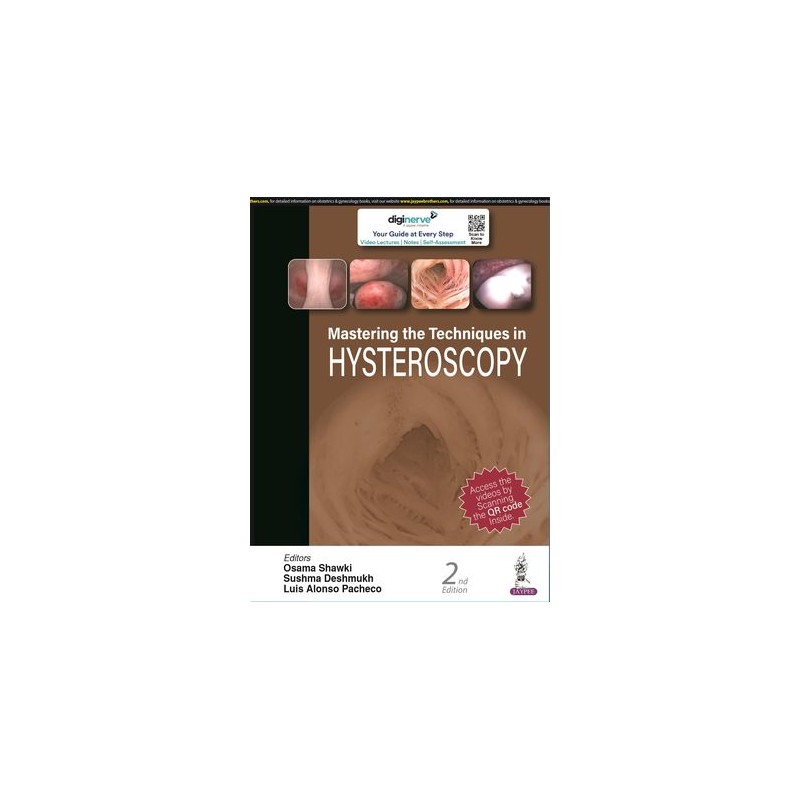
A hysteroscopy is a minimally invasive procedure used to examine the inside of the womb (uterus). It is performed using a hysteroscope - a narrow telescope with a light and camera at the end. Images are sent to a monitor to allow clinicians to see inside the womb.
This book is a complete guide to the use of hysteroscopy in the investigation and diagnosis of gynaecological disorders and diseases.
The second edition has been fully revised and updated and new topics added to provide clinicians with information on the latest advances and technologies in the field.
Beginning with an introduction to the technique, discussion on anatomy and physiology of the uterus, and descriptions of other imaging technologies, the book then explains the hysteroscope and procedural techniques.
Each of the following chapters covers the diagnosis of different disorders using hysteroscopy, including polyps and fibroids, abnormal bleeding, infertility, intrauterine adhesions, and much more.
The final sections discuss potential complications, medico-legal aspects and anaesthesia in hysteroscopy.
Written by an experienced team of recognised editors and authors, this comprehensive guide is highly illustrated with clinical images and figures.
A QR code inside the book provides access to operative videos demonstrating techniques.
Previous edition (9789386150493) published in 2017.
Data sheet
Reference: 8700
Author: Klaus Friese
Przewodnik dla lekarzy i farmaceutów
Reference: 11056
Author: Andrzej Kasprowicz
Procedury badawcze, interpretacja wyników