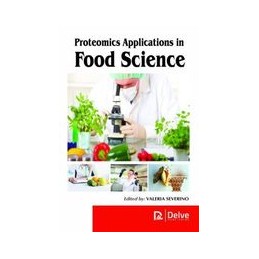
In the last decades, proteomics has rapidly advanced with novel developments and cutting-edge approaches, resulting in reliable platforms widely used for several purposes. Among others, food science represents one of the most dynamic and growing research areas in which proteomics is extensively applied. Food proteomics is commonly used to characterize raw materials, determine the food composition and evaluate the relationship between the food protein content and the nutritional properties. Moreover, quality control during food production can be monitored with proteomics, along with food traceability, quality and safety, in particular by detecting the presence of allergens or contaminants. Considering the complexity of food matrices and the elevated variability of food-associated proteins and peptides, it is hard to choose a single proteomic strategy. Often, a combination of multiple techniques achieves the better results, with proteomic approaches well adapted to each problem. This book covers several aspects of proteomics in food science, highlighting a range of methods and applications for analyzing the food composition, the presence of specific allergens or microorganisms, and for evaluating food identity and quality. To this aim, the book is organized into three Sections. In Section 1 are reviewed technical aspects at the basis of proteomics, focusing on concepts and challenges of proteomic analyses, sample preparation and techniques commonly used such as one- and two-dimensional electrophoresis, chromatography and mass spectrometry. In Section 2 are reported proteomic applications in food science, emphasizing on food authentication, for example producing a fingerprint typical of each food or food component. Moreover, this Section contains some interesting applications such as the identification of milk components in ancient food and the use of proteomics to evaluate ex vivo protein modifications and their effects on foods. Finally, the Section 3 focuses on proteomics and food allergies, a particularly dynamic field also called food allergenomics. Here are reported some particular proteomic applications to assess the physicochemical properties of food allergens.


 Dostawa
 Płatność
 Zwroty