
• Banner

  • Reduced price
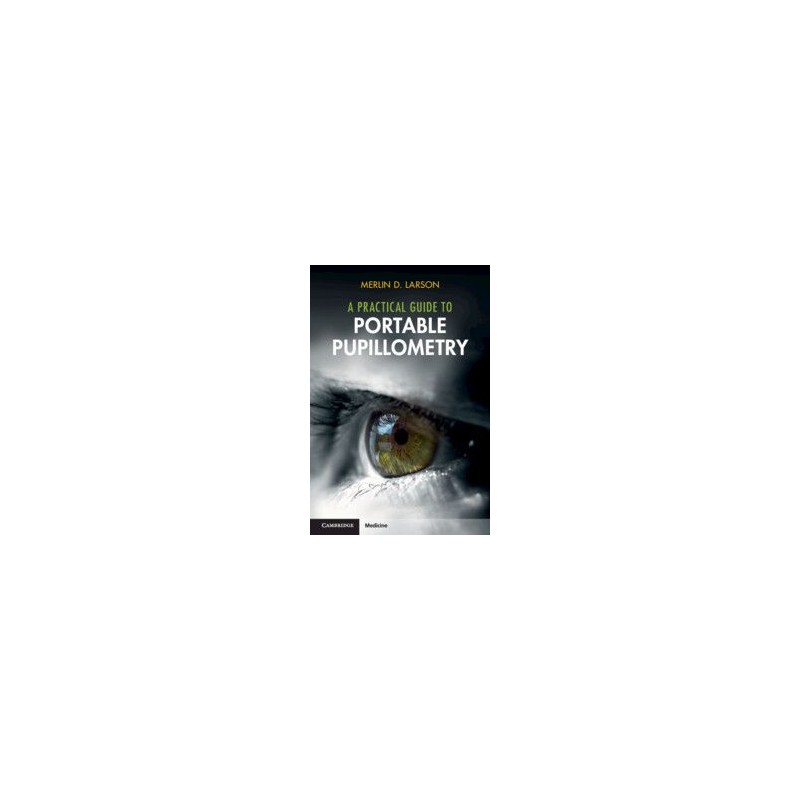
A Practical Guide to Portable Pupillometry

A Practical Guide to Portable Pupillometry

9781009436298
260,76 zł
234,69 zł Save 26,07 zł Tax included
Lowest price within 30 days before promotion: 234,69 zł
Quantity
Available in 7-14 days

  Dostawa

Wybierz Paczkomat Inpost, Orlen Paczkę, DHL, DPD, Pocztę, email (dla ebooków). Kliknij po więcej

  Płatność

Zapłać szybkim przelewem, kartą płatniczą lub za pobraniem. Kliknij po więcej szczegółów

  Zwroty

Jeżeli jesteś konsumentem możesz zwrócić towar w ciągu 14 dni*. Kliknij po więcej szczegółów

Description
The applications and advantages of portable pupillometry for a wide variety of healthcare providers are becoming increasingly evident, with frequent pupil evaluation becoming the protocol throughout critical care and emergency departments. Authored by a world leading expert, this practical, user-friendly book brings together all the research on portable pupillometry and explains the meaning of the various parameters that new portable pupillometers provide. Starting with the anatomy and physiology of the pupil, the book moves on to discuss pharmacological effects, unusual pupillary syndromes, measurement and size of the pupil, pupillary reflex dilation and pupillary unrest. Additional chapters focus on traumatic brain injury, cardiac arrest, intensive care, opioid effect, acute pain and anisocoria and provide valuable clinical examples and case reports. Also featuring an extensive bibliography for further reading, this book is essential reading for all healthcare professionals using the pupil to evaluate drug effects and ischemic/traumatic insults to the brain.
Product Details
103376
9781009436298
9781009436298

Data sheet

Rok wydania
2024
Numer wydania
1
Oprawa
miękka foliowana
Liczba stron
166
Wymiary (mm)
154.00 x 233.00
Waga (g)
270
  • Preface; Acknowledgements; Glossary; Introduction; 1. Early history of the pupil; 2. Anatomy of the pupil; 3. Physiology of the pupil; 4. Pharmacology of the pupil; 5. Unusual pupillary syndromes; 6. Measurement of the pupil; 7. Pupil size; 8. Pupillary light reflex; 9. Pupillary reflex dilation; 10. Measuring inhibition at the EW nucleus; 11. Traumatic brain injury, cardiac arrest, intensive care; 12. Opioid effect and acute pain; 13. Anisocoria; 14. Clinical examples and case reports; Conclusion; References; Index.
Comments (0)